
Sniphi uses Microsoft Cloud architecture to train AI models to recognize various scents. Thanks to this innovative approach, we were invited to showcase our solution at the Microsoft Innovation Hub in the Microsoft Office in Warsaw.
It took us just four weeks to develop a model capable of identifying the aromas of different spices.
This model is now available for testing at the Microsoft Office – and you’re welcome to try it out!
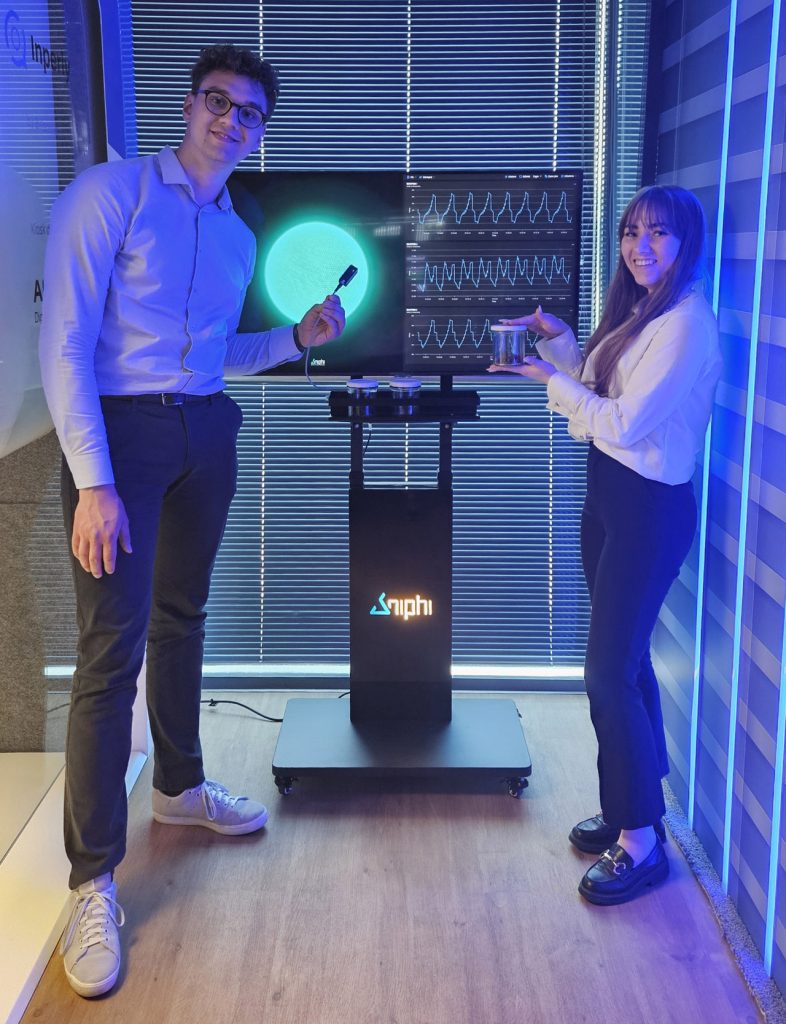
Microsoft Innovation Hub, June 2025
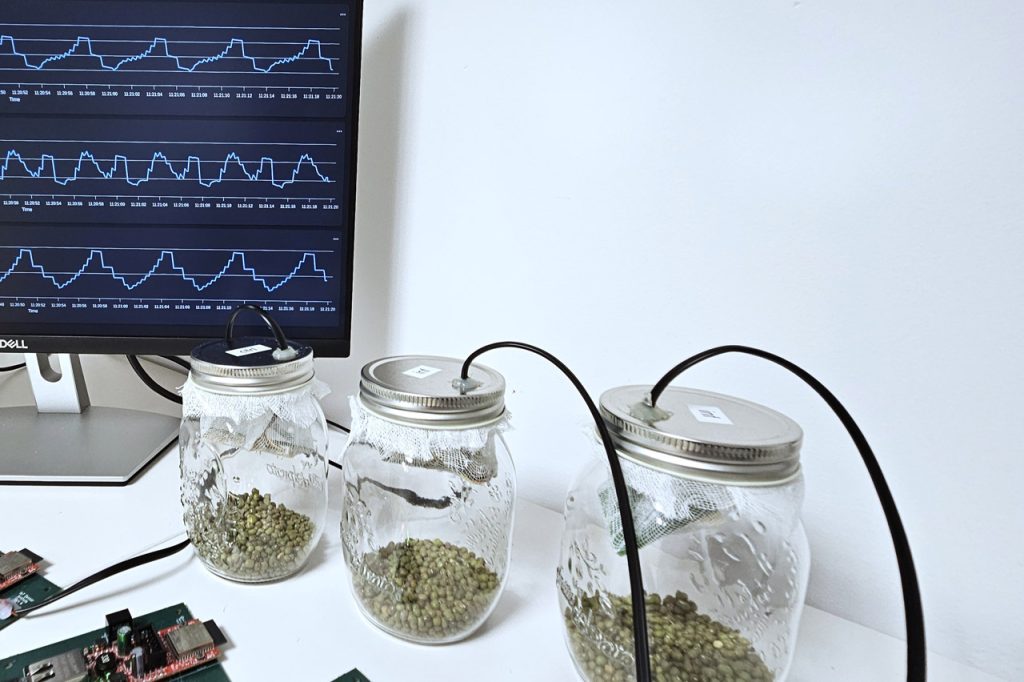
In a successful pilot study conducted with our partners from the University of Silesia and the Jagiellonian University, Sniphi demonstrated its ability to detect insect infestations in food products using scent recognition.
Encouraged by these results, we have expanded the research to cover a broader range of pest species. The ongoing study will form the basis of a scientific publication. Our ultimate goal is to develop a universal device for use in food storage facilities such as silos, enhancing food protection and safety at various stages of the supply chain.
Download the whitepaper for a summary of the experiments.
This case study aims to show the modular design of Sniphi’s digital nose and its adaptability to various industries based on the example of recognition of the original perfume from its counterfeits. Using advanced digital nose technology and AI, we can confidently answer the question:
”Is this an authentic perfume?”
Our technology accurately distinguishes between authentic and counterfeit fragrances.
We believe that this project proves the potential of the digital nose to be a global game-changer in many industries.
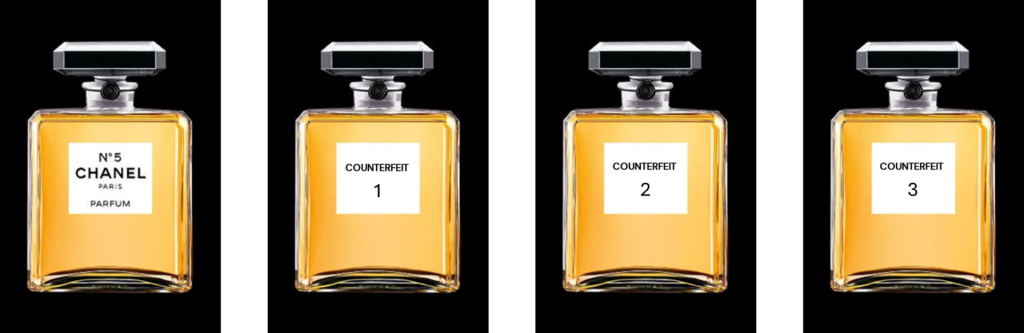
Distinguishing between original perfumes and their cheaper imitations is one of the most significant challenges in the fragrance industry. To check the feasibility of the digital nose in meeting this requirement, the following experiment was conducted.
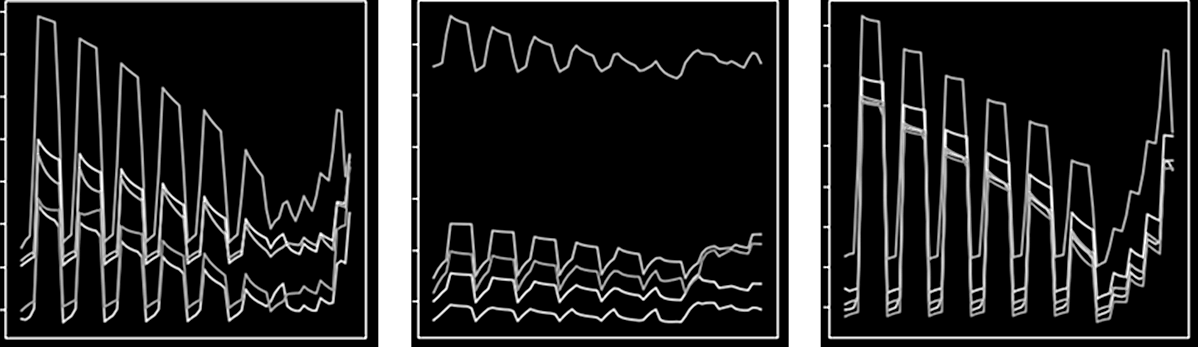
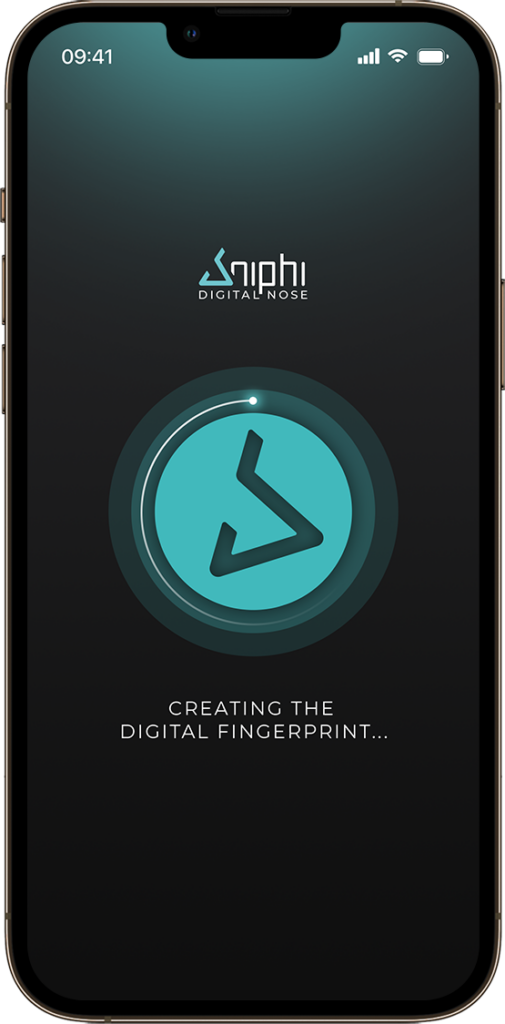
The first step is to create a “digital fingerprint” of the original Chanel No. 5 perfume using multiple data profiles from different measurements conducted in different conditions.
However, the profile itself has no value without being analyzed by advanced algorithms.

The data profiles feed the Machine Learning algorithms (part of the AI solution) to create the pattern for the original Chanel No. 5 perfume.
During the training phase of the model, it is provided with a large number of additional measurements of original Chanel No. 5 perfumes, as well as their imitations. Additionally, another original Chanel perfume of a different type was measured by sensors to additionally try to confuse the model. Every time the measurement was labeled by the operator with the type of measurement, method and expected outcome (original, not original) using Sniphi’s app (Power Apps). The information about the temperature and humidity is added automatically by the sensor and was used as additional variable by the model.
Once sufficient data has been collected and the model trained on various scent samples, the algorithms can accurately determine whether the perfume is original or counterfeit. The results are displayed in a user-friendly format in Power BI, making the decision-making process straightforward.
Depending on the sensory analysis, the system displays various messages.
If the sensors detect a scent that meets the criteria for original perfumes, a green message confirms the fragrance’s authenticity.
If the scent doesn’t meet the algorithm’s requirements, a red warning, indicates a potential counterfeit.
If the algorithm is not certain of the result, it will ask to repeat the measurement.
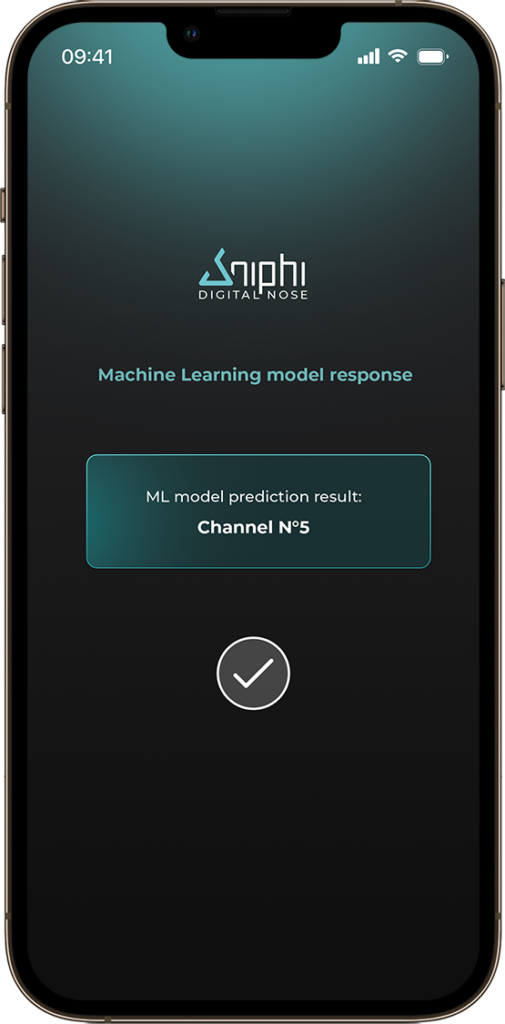
Good! Your Chanel No. 5 is a genuine product.