
Sniphi, a technology startup founded by Antdata, is a leader in digital scent recognition, combining advanced sensors with AI to identify and interpret smells.
Our mission is to develop and promote a Digital Nose Platform that enables the easy and effective implementation of scent and gas recognition solutions. We combine advanced heated sensors with deep expertise in scent chemistry, physics, and AI algorithms to deliver precise and reliable smell-based intelligence.
We know that the next revolution in AI and robotics will center around smell. It’s a complex and subtle sense – which is why it has been the last to be digitized. But the potential impact across industries is enormous. Sniphi is leading the way in scent recognition technology.
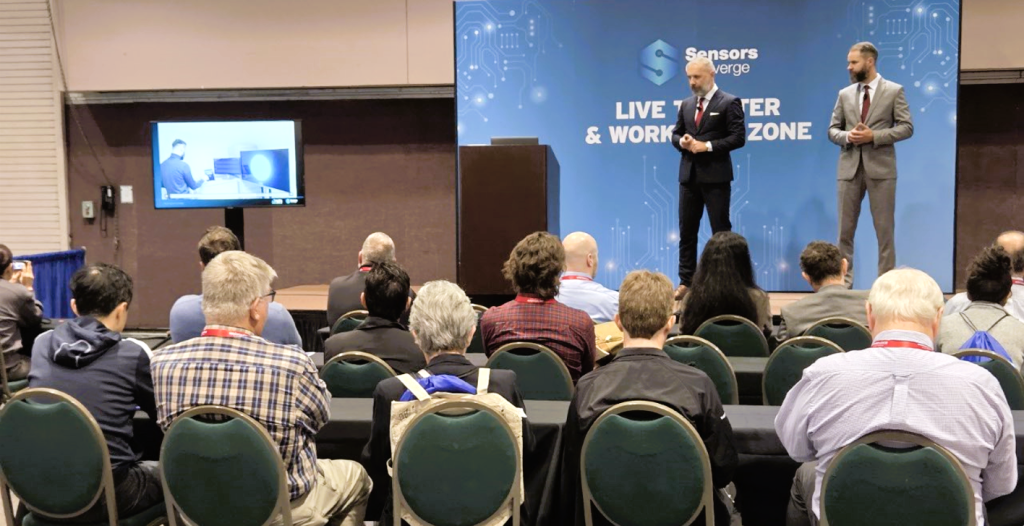
Sniphi had its official premiere at the Sensors Converge conference in June 2025, held in Santa Clara, California. Download a PDF with the introductory presentation.
The development of advanced scent recognition solutions, combining electronics and AI, was made possible thanks to the collaboration of a team of talented professionals from various fields, including IoT Hardware development, Embedded programming, Data Engineering, Data Science, Internet of Things, Mathematics and Chemical Engineering.
The Digital Nose is a modular platform designed for easy integration across various environments and industries. It consists of four main components:

gathering data profiles (digital fingerprints) of the gas or scent

analyzing data profiles and recognizing patterns

to ensure reliable data transfer and analytics
to ensure consistent and dependable results over time
The sensor is one of our most innovative technologies. It consists of an IoT terminal (making it an IoT-class device) and a board equipped with temperature-controlled hotplates. By adjusting the surface temperature of the hotplates in time, we can influence their chemical reactivity.
Oxygen particles on the surface react with target gas (scent) molecules, releasing electrons into the metal oxide layer. This reaction causes a measurable change in the electrical resistance of the hotplate.

The electrical resistance depends on the specific composition of the analyzed gases (scents):
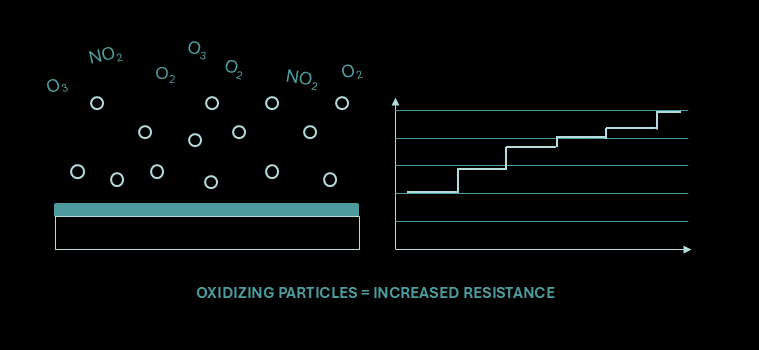
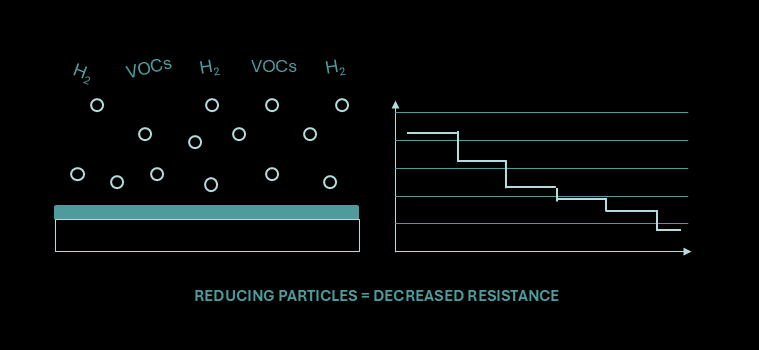
By changing the temperature of the hotplate, the sensor generates a unique data profile, which is later used by the AI solution (the digital brain) to define and recognize the pattern of a given gas or scent.
AI solutions recognize data patterns with Machine Learning algorithms. Thanks to this it can create a unique “digital fingerprint” of measured substance, that will be kept in the cloud database.
With a sufficient number of experiments (fingerprints) in the database, the neural network can recognize the scent profile using specialized algorithms.
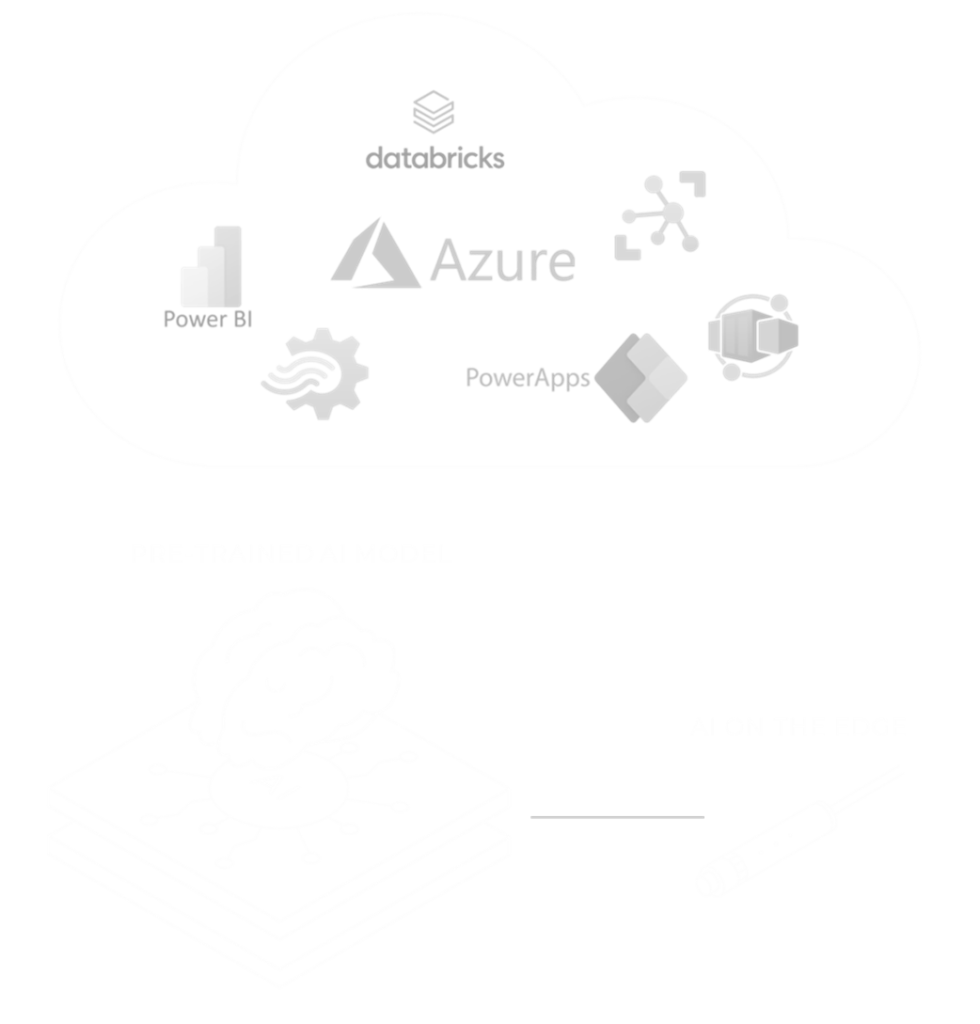
All physical and software components are integrated into a cohesive environment using Microsoft Azure cloud services.
Thanks to our composable approach, you can easily train different models and then assemble a ready-to-use solution from predefined components — fully tailored to your specific needs.
Alternatively, you can deploy your trained model directly to our Digital Nose sensor, allowing it to operate as an edge device. This follows the principles of AI on the Edge and IoT on the Edge, enabling real-time processing without relying on constant cloud connectivity.
Although flexible, the system must be implemented according to a standardized procedure.
The main steps of the implementation are
This procedure may vary for very specific implementation or project, nevertheless, the small steps method and continuous improvement approach is recommended to achieve the best results.